Why choose a manufacturer with its own independently developed system? It's not just about efficiency.
When you're picking a manufacturer, you usually look at price, delivery time, and quality — those are the basics. But here's something people often miss: does this factory actually have its own production management system? It's not about purchasing off-the-shelf software, but a system that truly suits its own business and is independently developed and iterated. What this reflects is the actual control and long-term stability of a manufacturing enterprise.
-
Delivery time is controllable: from empirical estimation to system calculation
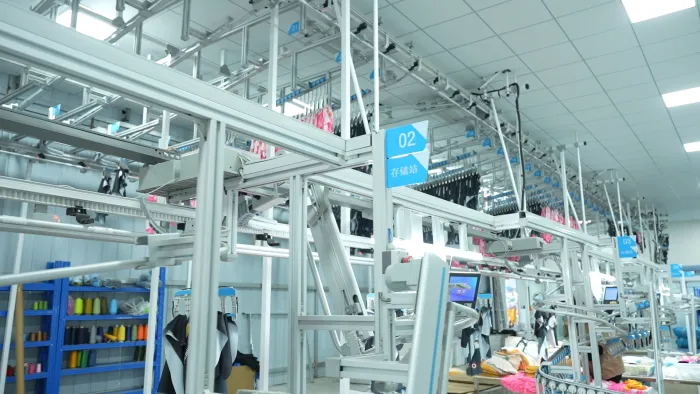
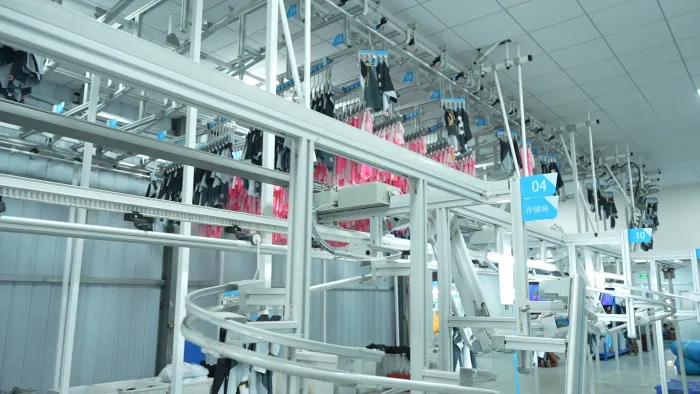
Traditional factories rely on manual scheduling, and delivery times are often estimated roughly. The practice of Toton Sports has provided an alternative solution: After relocating from Shenzhen to Xiantao in 2023, inspired by the express delivery assembly line, the company independently developed an intelligent production management system and began production at the end of 2024. The delivery cycle was reduced from the original 3 weeks to 7 days,and we also offer expedited service for even faster delivery.
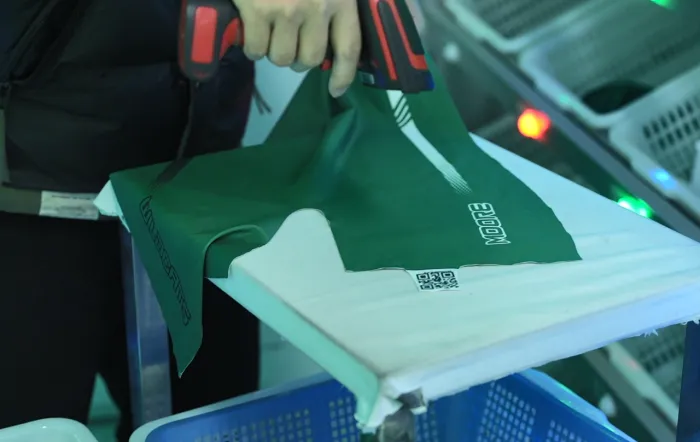
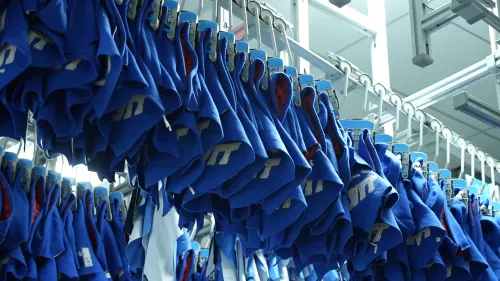
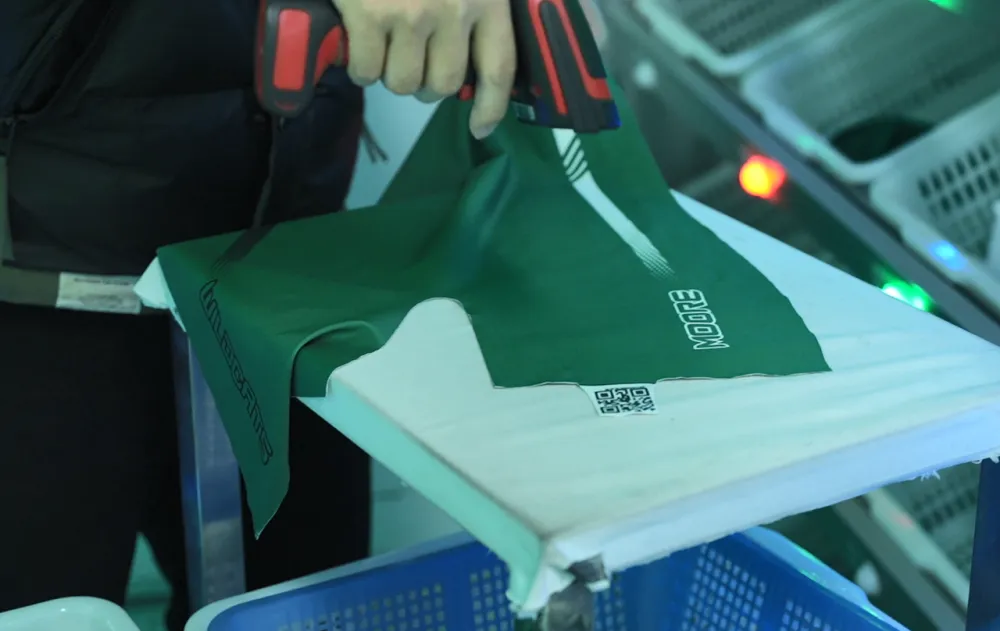
The specific paths for efficiency improvement: When designers input keywords such as "baseball uniforms, polyester fabric" into the system, 5 styles are generated in 20 seconds and 3D model effects are output in 10 seconds. The manual layout of 40 pieces of baseball uniform pieces originally required 2 hours, but the system completed it in just 10 minutes. Each piece of fabric is equipped with an independent QR code. From design to printing to finished clothing, the entire process is carried out through scanning, eliminating the need for manual tracking.
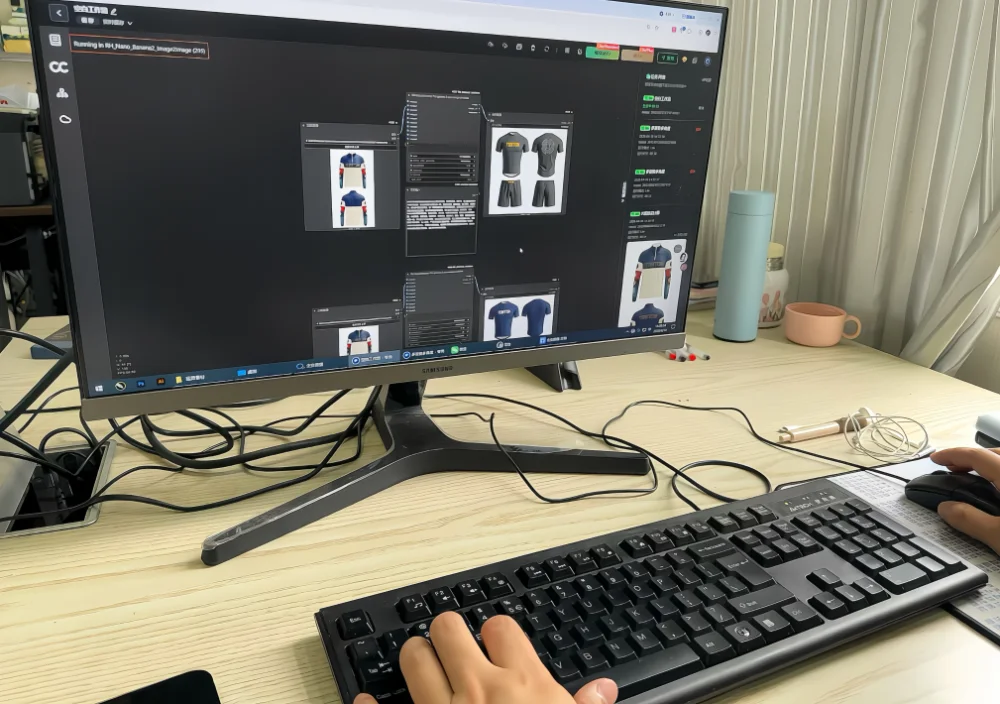
The system automatically calculates the delivery date based on production capacity, materials and processes. It does not simply "announce quickly", but "calculates accurately".
-
Full-process traceability: Quality control from post-incident remediation to pre-incident prevention
In factories without systematic traceability, when problems occur, it is often difficult to identify the root cause. The approach taken by Tonton Sports is: to give each piece of fabric a "ID card" - a QR code - to record all the process data. When problems arise, it is not a matter of "looking back for solutions", but the system automatically marks and immediately intercepts them.
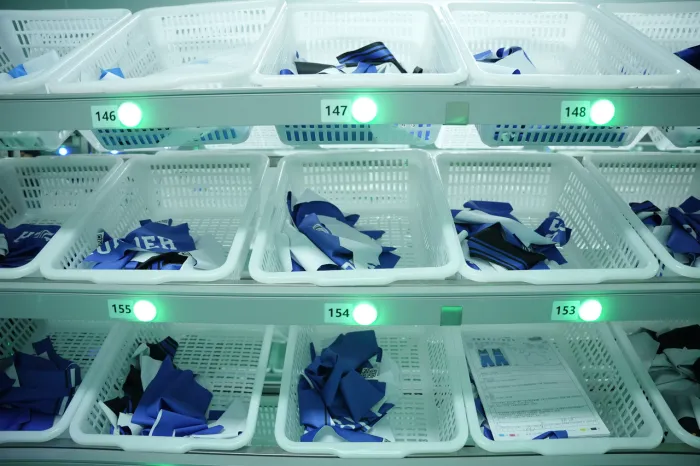
The changes in the intelligent sorting process? Way more obvious. Before, you'd have over 20 workers sorting maybe 3,000 pieces of clothing a day. And it was hard to catch errors. Now? Just two workers with scanners can do the same amount. Plus, if something goes wrong, you can trace it right back to the specific process and the person responsible.
-
Real-time transparency: Customers can view the entire order process.
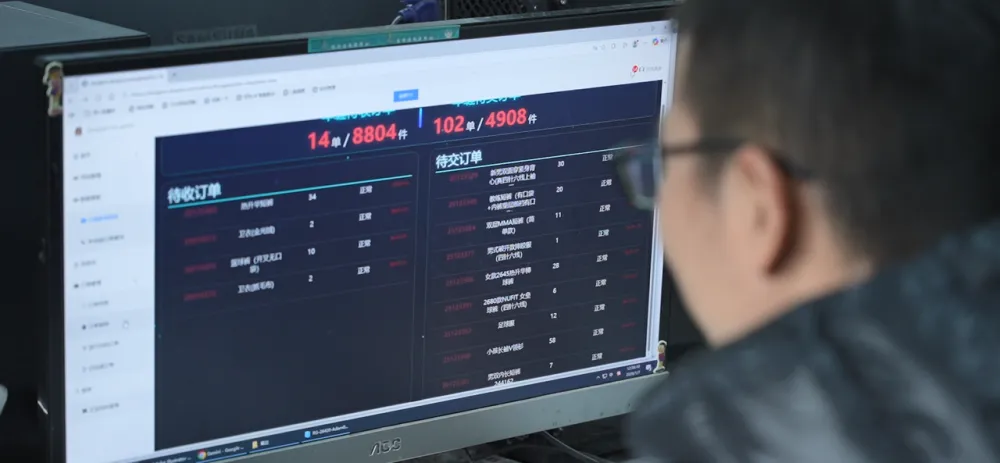
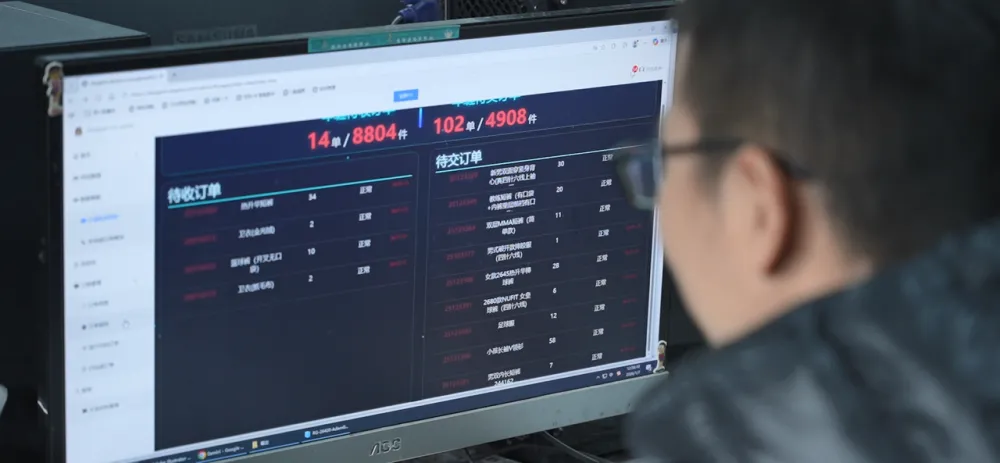
In late August 2024, Tonton Sports launched its self-developed MES system. After a customer places an order, every step from production to delivery - from cutting and printing to hanging the strings, quality inspection completion, and warehouse dispatch - can be viewed in real time. There is no need to call for updates or wait for feedback from the sales staff. This transparency is the foundation of trust and also forces the factory to maintain efficient operation on its own.
-
Autonomous iteration: System capabilities are not constrained by external suppliers
The IT team of Tonton Sports has independently developed the entire process, from AI design, automatic layout to the MES system, based on the actual production problems. The self-developed system supports intelligent production scheduling, multi-order parallel processing, real-time progress visualization, enabling it to quickly respond to cross-border small orders with quick delivery, and also be capable of stably handling tens of thousands of pieces of large-batch orders, ensuring no wrong codes, no mixed styles, and no delays.
However, Tonton Sports did not stop here. Instead, it continued to iterate and strive to provide customers with a better experience. Currently, it is promoting tailor-made solutions, CCD automatic detection of printing quality, automatic grasping of cut pieces by mechanical hands, and automated packaging, etc. The ultimate goal is to integrate a complete Internet platform for the clothing industry.
-
The digitalization of efficiency
Look, data speaks for itself. In 2023, we made 300,000 pieces of sports clothing and did about 20 million yuan in sales. Then we put our own system into use. By September 2024? We'd already produced 900,000 pieces. And the projected annual sales? Around 100 million yuan. Monthly production capacity jumped from 100,000 pieces to 300,000. And that includes custom clothing — also 300,000 pieces a month. On top of that, we got recognized as a high-tech enterprise.
Conclusion
When choosing a sports apparel manufacturer, it's not just about whether they can produce, but also about how stable and accurate their production is, whether they can trace back the origin, and whether they can provide long-term reliability. The self-developed system not only improves efficiency but also enhances the quality baseline, delivers trust, and strengthens overseas compliance capabilities. Toteng Sports has been deeply involved in the sports apparel industry for 20 years, with 90% of its products exported to Europe and the United States, covering over 50 categories such as basketball jerseys, football jerseys, and baseball jerseys. Choosing such a manufacturer means you will not only get efficiency, but also the certainty of delivery, the traceability of quality, and the long-term reliability of cooperation.