From Design Drawings to Finished Products: How the Professional Team Transforms Complex Sportswear Shapes?
Introduction:
The final appearance of a piece of sportswear when worn by the wearer is often believed to be determined by the fabric. But here's the thing in the clothing industry — the one step that really makes or breaks it? Pattern making. And nobody really talks about it.
Sportswear pattern-making is a lot harder than regular clothing. It has to look good, sure, but also work for movement. Take basketball jerseys — just as an example. Even a difference of half a centimeter in the shoulder movement can cause discomfort when shooting; for baseball jerseys, a slight variation in the silhouette can completely change the visual style.
Tonton Sports has been operating in this field for two decades, specializing in athletic apparel across more than 50 sports categories—including basketball, football, and baseball uniforms. Approximately 90% of its products are exported to markets in Europe and North America. Its ability to serve such a broad range of product categories and international markets stems not only from the expertise of seasoned craftsmen but also from a comprehensive, end-to-end digital pattern-making system—from initial design sketches to finished prototypes.
The following sections outline our methodology for reconstructing the complex silhouette of sportswear.
AI-assisted, pattern makers in charge
Traditional pattern making relies on the personal feel of the pattern maker, but this ability is difficult to replicate, and the patterns produced by different people are inconsistent. Tonton Sports' approach is to digitize the pattern-making process: designers input keywords such as "baseball jacket" and "polyester fabric", and the intelligent system generates five styles in 20 seconds and outputs 3D digital model effects in 10 seconds. The solutions generated by AI are not the final results; pattern makers will adjust the silhouettes, optimize the details, and iterate repeatedly on this basis.
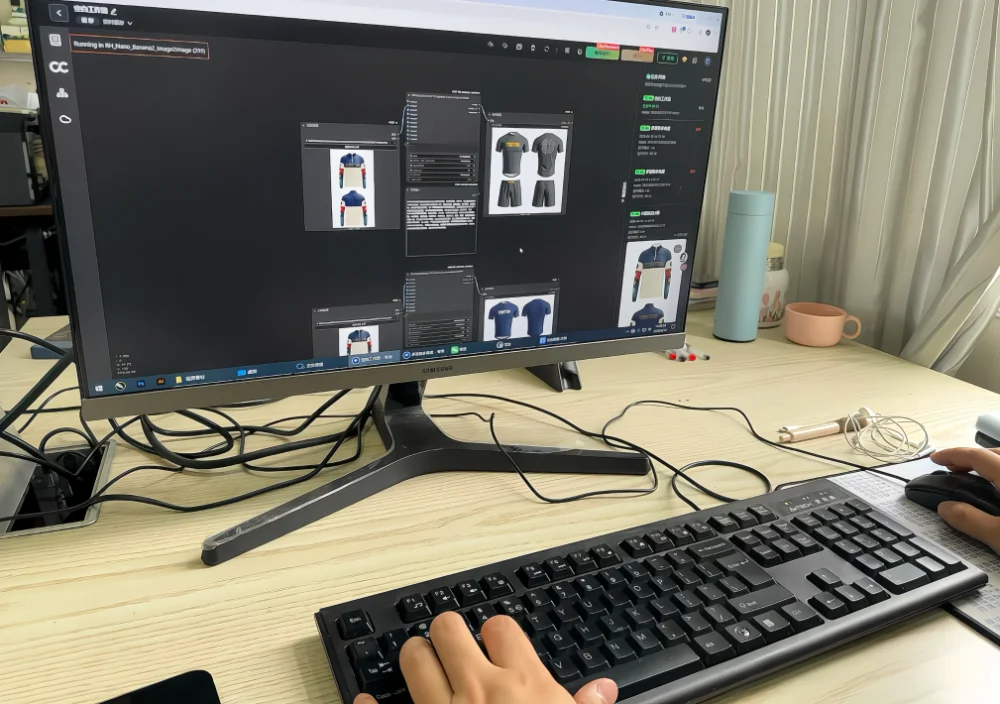
The most undesirable feature of professional sportswear is that it looks good at rest but feels uncomfortable in motion. Our pattern-making team, based on a 22-year database of European and American body types, precisely matches key areas such as shoulder slope, chest circumference, and sleeve cap. They reserve dynamic allowances according to the intensity of the sport - for basketball uniforms, they increase the range of motion in the shoulders and back; for tight-fitting styles, they apply gradient pressure; and for loose styles, they maintain a neat and crisp silhouette. This ensures that the clothing is stylish without being tight, and comfortable without being loose - an experience that AI cannot calculate.
The core of this model is not to replace humans with machines, but to free pattern makers from repetitive labor. Previously, it took 2 hours for manual layout of 40 baseball jacket pieces, but now the intelligent system can complete it in 10 minutes. Pattern makers can truly focus their energy on areas that require more judgment, such as dynamic fit, fabric shrinkage control, and special silhouette processing.
Each piece of fabric has an "ID card".
Pattern making is only the first step in realizing a pattern. The real challenge lies in whether the pattern can be accurately and completely reproduced in mass production. Even if the pattern maker achieves millimeter-level precision in dimensions, curves, and alignment on the computer, any deviation of half a centimeter in cutting, misalignment in printing, or misplacement in sewing will immediately distort the final garment's silhouette and significantly reduce its wearing effect.
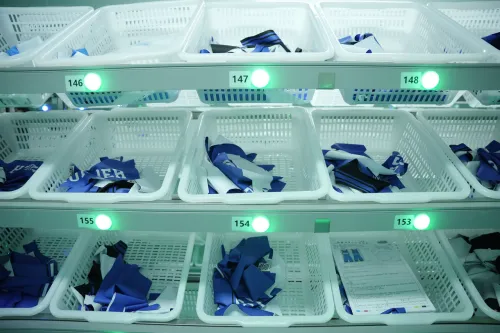
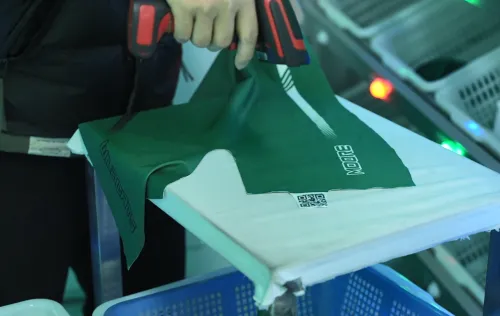
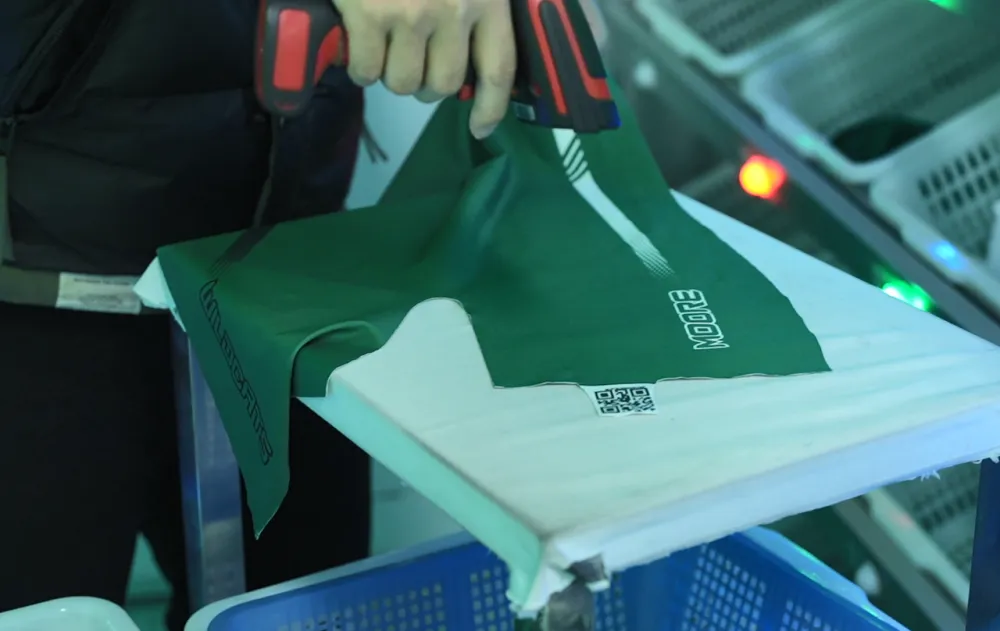
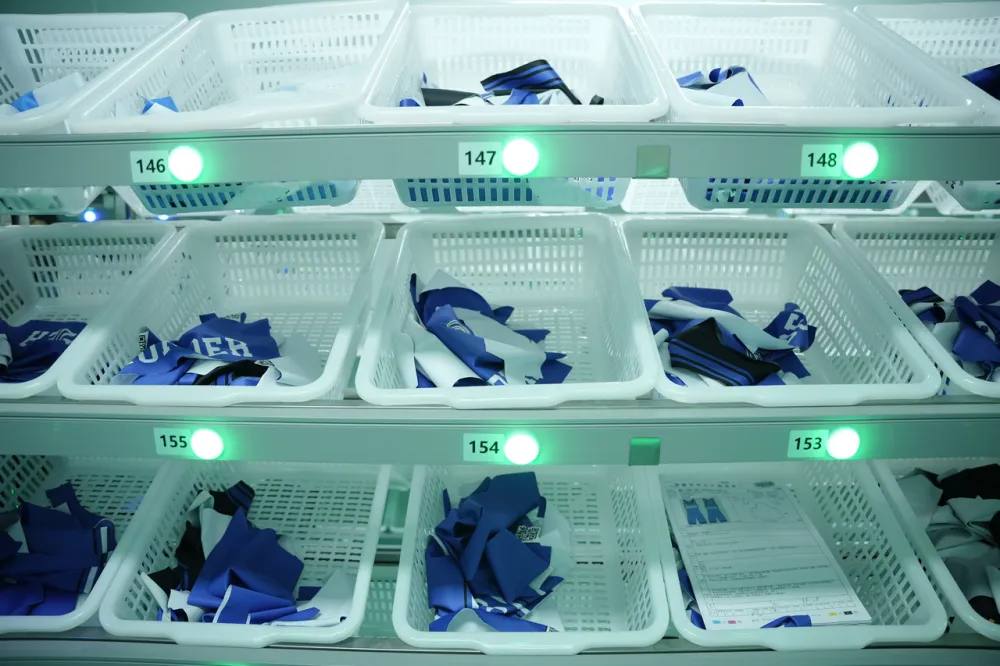
To fundamentally solve this problem, Tonton Sports has implemented a one-item-one-code intelligent tracking system throughout the entire production process. Once the design draft and pattern are confirmed, all data is directly synchronized into our self-developed intelligent production management system. Each cut piece will be assigned a unique and exclusive QR code. This QR code is bound to all information such as pattern size, cut piece number, splicing position, alignment marks, and process requirements. From cutting, printing, sewing to quality inspection, each process must be scanned for confirmation and follow the instructions for flow.
Through this mechanism, the professional design intentions of the pattern maker are fully and accurately conveyed to each piece of the cut fabric. Workers only need to follow the QR code instructions to operate in a standardized manner, which can completely avoid the problem of "looking similar but not fitting right when worn", ensuring a high degree of uniformity in the bulk production patterns.
The production changes brought about by this system are also very obvious. In the sorting and checking of clean pieces, it used to take over 20 employees a whole day to sort and check 3,000 pieces of clothing, and it was difficult to locate the cause of any errors. Now, only two employees are needed to complete the same amount of work by scanning codes, with a significant increase in efficiency. In case of any anomalies, they can also quickly trace back to the specific process and time point.
Different fabrics, different algorithms
There is a wide variety of fabrics for sportswear, such as polyester, spandex, mesh, and functional knitted fabrics, each with different elasticity, shrinkage rate, and heat setting characteristics. Pattern makers must take these factors into account when making patterns to ensure that the finished garments fit well and do not deform.
For example, for basketball uniforms, if the customer selects high-elasticity fabric, the pattern can be made to fit the body more closely without any feeling of restraint during movement; but if it is changed to regular polyester fabric with much less elasticity, we need to reserve more allowance for movement in key areas such as the shoulders, back, and armpits. Another example is heat transfer printing. During the high-temperature heat setting process, the fabric will slightly shrink - if this shrinkage is not calculated and compensated for in the pattern design stage, the finished product size will be smaller and the silhouette will be distorted.
At Tonton Sports, after nearly 20 years of practical accumulation, we have formed a complete database of fabric processes. The team has mature judgment standards for the stretching, shrinkage, and setting parameters of various fabrics, and these data are simultaneously stored in the intelligent production management system. When developing new styles, they can be directly called up, reducing the need for repeated sampling and improving the accuracy of the patterns and the efficiency of development.
Size library + physical measurement
No matter how fast digital design is, the final product still needs to be worn by real people, and only then can it be judged whether it fits well. For sportswear, sizes range from XXS to 5XL, and the requirements for the fit vary greatly depending on different body types and sports. Relying on a single standard size system often leads to "too tight for small sizes and too loose for large sizes". Over the past 22 years, in the process of serving the European and American markets, we have gradually developed our own size library - our pattern-making team has established mature matching parameters for key dimensions such as shoulder slope, chest circumference, and sleeve cap, ensuring that all sizes fit well and are comfortable for different body types.
Before each batch of sportswear is shipped, it undergoes a series of physical performance tests, including high-strength tensile tests, anti-pilling and anti-pilling tests, anti-shrinkage tests, and color fastness to rubbing tests. To put it simply: Will the fabric deform when pulled? Will it pill after a few wears? Will it shrink after washing? Will the color fade after sweating? Only when all the tests are passed can it be packaged and shipped.
This "size library matching + physical measurement" process ensures that every piece of sportswear sent out by Tonton Sports has undergone double verification from virtual to reality. The size library solves the basic problem of "fit or not", and the physical test solves the experience problem of "comfortable or not". Only when the two are combined can it be a truly professional sportswear that can stand the test of time.
Conclusion
From a design drawing to a perfect finished product, what lies in between is the professional pattern maker's in-depth understanding of structure, the human body, fabric, and movement. Tonton Sports adheres to professional pattern-making technology as its core competitiveness, using experience, attention to detail, and digital tools to accurately reproduce every complex silhouette, ensuring that the design remains true to its original form, making the wearing experience more professional, and ensuring the stability of mass production. Whether it's for professional team game wear or cross-border brand trendy items, we can support the realization of every one of your creative ideas with our pattern-making expertise.